In the ever-evolving landscape of fashion, where boundaries are constantly being pushed and redefined, one trend has emerged that has captured the imagination of designers, models, and audiences alike: the use of prosthetics. From the avant-garde runways of Paris to the red carpets of Hollywood, prosthetics have become a powerful tool for challenging beauty norms, exploring identity, and creating unforgettable visual spectacles.
Duran Lantink's Fall-Winter 2025 show at Paris Fashion Week was a prime example of this trend. Set in an office space reminiscent of the dystopian world of "Severance," his collection was a riot of unconventional silhouettes and eye-catching styles. Warped proportions, zany animal prints, and even butt-revealing jeans were all part of the mix. But it was the prosthetic torsos that truly stole the show. Model Mica Argañaraz showcased a chiseled six-pack, while emerging male model Chandler Frye donned a pair of large, bouncing breasts. The resulting videos went viral, sparking heated debates on social media about whether this was a celebration of gender fluidity or a mockery of femininity. For Lantink, however, it was all about playing with the idea of humans as dolls. "I love the idea of women as action figures," he wrote in the show notes. This sentiment taps into a broader trend on the runways, where prosthetics are increasingly being used to challenge and redefine traditional notions of beauty and identity.
The history of prosthetics is a fascinating journey through time. The oldest known medical prosthetics, two artificial toes, date back to ancient Egypt, where they were used as walking aids. Fast forward to 300 BC, and we see the first known prosthetic leg, made from bronze and wood, likely worn by a Roman nobleman. Following the American Civil War in 1860, more advanced wooden limbs with rubber cushioning were developed to meet the needs of new amputees. From there, the use of prosthetics expanded beyond medicine into the realm of art and entertainment. At the dawn of cinema in 1895, prosthetics were created using a crude mixture of materials like gum, cotton, and wax. By the 1930s, the invention of foam latex revolutionized the industry, making rubber masks commercially available for the first time, thanks to prop maker Don Post, who earned the nickname "The Godfather of Halloween." Lifelike faces became accessible not just for performers but also for everyday people, paving the way for the use of prosthetics in various forms of entertainment, including the art of drag, where performers use prosthetic breastplates and hip pads to express different forms of femininity.
Today, the use of prosthetics in fashion and entertainment has reached new heights. The 2024 horror film "The Substance" won an Oscar for its stunning prosthetic effects, worn by actors Demi Moore and Margaret Qualley to achieve visceral, otherworldly looks (though Qualley later revealed the prosthetics caused her skin damage that took a year to recover). On the red carpet, special effects makeup artist Malina Stearns masterminded Doja Cat's look at the 2023 Met Gala, where the pop star embodied Karl Lagerfeld's beloved cat in a custom Oscar de la Renta gown and intricate facial prosthetics. Stearns has also worked with musicians on other creations, including the alien featured in Sabrina Carpenter's 2024 VMAs performance, SZA's bug-eyed album cover, and the crocodile-inspired cheeks and chest pieces worn by Doechii. Lantink is not the only designer using prosthetics to subvert gender norms. Stearns herself has applied many fake boobs to men and vice versa, pushing the boundaries of what is considered traditionally masculine or feminine.
While materials like latex remain industry standards for prosthetics, advancements in 3D scanning and printing are allowing for even more complex and intricate creations. Fashion, increasingly inspired by the world of entertainment, is now raiding its props department. In 2019, Balenciaga collaborated with makeup artist Inge Grognard to create models with extremely accentuated cheekbones and pouts for its runway show. Visual artist and photographer Nadia Lee Cohen transformed into 33 different characters for her 2022 "HELLO My Name Is" project, using an array of prosthetics, wigs, and costumes to reimagine the person behind each name tag found in a thrift shop. Drag queen Alexis Stone regularly attends Paris Fashion Week as a different celebrity doppelgänger each season, most recently transforming into Adele in a process that took six weeks of research, sculpting, and makeup.
Makeup artist and entrepreneur Isamaya Ffrench has turned models into elfin-eared creatures for Burberry, extraterrestrials for Paco Rabanne, and animals for Collina Strada. "The (Spring-Summer 2023) show was about breaking down the artificial barriers we put up between ourselves and the planet. So, the idea of transforming models into these hybrid human-animals just felt right," said Collina Strada's founder Hillary Taymour. The prosthetics were purchased from a props studio, then hand-painted and pierced to "feel organic and slightly uncanny," according to Taymour. She aimed for them to be "wearable in a high-fashion way" and not come across as gimmicky or simply party shop fodder. "These weren't just masks; they were full-on transformations," she emphasized.
When used in fashion, prosthetics serve as a commentary on a reality where fillers and facelifts have become increasingly common. Martine Rose sent models with fake noses down the runway at Milan Fashion Week in June to challenge Eurocentric beauty standards. "The first thing you see in people is often their nose. And it is often the first thing they change about themselves," she told Vogue. While a "plastic surgery look" is always popular and people often seek to enhance their appearance, the rise of prosthetics in fashion may have more to do with art than cosmetics. Unlike cosmetic procedures, which are typically discreet, the prosthetics used on the runway are designed to be noticed, creating standout, scroll-stopping moments that designers crave. "The desire to create eye-catching content and viral moments lends itself well to the combination of fashion and prosthetics," said Tanya Noor, a course leader of the Hair, Makeup and Prosthetics for Performance undergraduate program at London College of Fashion.
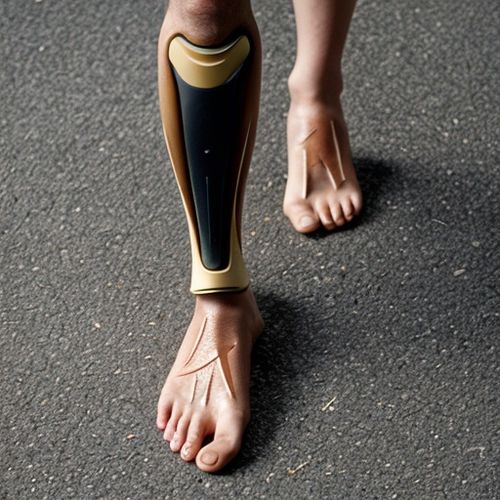
Prosthetics also serve as a canvas for artistic expression in fashion. "Fashion has always been about identity play, but prosthetics take it to another level," said Taymour. "They let us completely rewrite the human form — why stop at styling clothes when you can style bodies?" Mollie Gibb, a lecturer of the hair, makeup, and prosthetics course in London, echoed this sentiment, saying that prosthetics allow hair and makeup artists to create looks "in line with the statements that the clothes are making." Some designers have also used prosthetics to address practical and progressive issues. Alexander McQueen's Spring-Summer 1999 show featured a Paralympic athlete and double amputee wearing carved prosthetic legs. More recently, emerging designer Zhongzhi Ding created jeans with a built-in penis (complete with a workable urethra) made from sponge, inspired by the artist Tom of Finland and aimed at transgender men who want to wear gender-affirming clothing. Ding linked the rising interest in prosthetics to body image anxiety and believes that "in the future, there will be a demand for prosthetics targeting more body parts."
For the most part, however, prosthetics in fashion remain a work of fantasy over utility. Taymour envisions a future where prosthetics go beyond just the face and hands and are used in full silhouette transformations that include dynamic movement. "Right now, a lot of prosthetics are static, but imagine if they had animatronics or soft robotics built in — like a dress that breathes or a tail that sways," she mused. "Fashion should always have a sense of fantasy, so let's take it even further." As technology continues to advance and the boundaries of fashion continue to expand, the possibilities for prosthetics in fashion are limitless. They offer a way to challenge norms, explore identity, and create unforgettable visual experiences that push the boundaries of what we consider beautiful and normal. In a world where self-expression is paramount, prosthetics provide a powerful tool for designers and artists to reimagine the human form and create a broader cultural narrative.
By David Anderson/Apr 3, 2025

By Samuel Cooper/Apr 3, 2025
By Eric Ward/Apr 3, 2025
By Amanda Phillips/Apr 3, 2025
By Amanda Phillips/Apr 3, 2025
By Sophia Lewis/Apr 3, 2025
By George Bailey/Apr 3, 2025

By Sophia Lewis/Apr 3, 2025

By Laura Wilson/Apr 3, 2025
By Emily Johnson/Apr 3, 2025
By Jessica Lee/Feb 26, 2025
By Sarah Davis/Feb 26, 2025
By James Moore/Feb 26, 2025
By Noah Bell/Feb 26, 2025

By Noah Bell/Feb 26, 2025
By Daniel Scott/Feb 26, 2025

By Ryan Martin/Feb 26, 2025
By Victoria Gonzalez/Feb 26, 2025
By Benjamin Evans/Feb 26, 2025
By Lily Simpson/Feb 26, 2025